
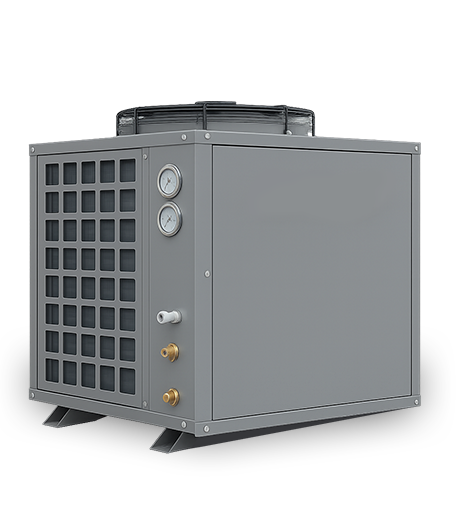
Hotels, hostels, hospitals, resorts and dharamshalas use large volumes of hot water every day, often at the same busy hours. That makes them ideal for heat pump water heaters, which cut water heating costs sharply compared with electric geysers, diesel or LPG. But to get reliable 24×7 hot water, the system has to be sized correctly. This guide walks you through how we size commercial heat pump systems at HEATX.
Step 1: Work out your daily hot water demand
Start with how much hot water your building uses in a day. As a general guide for Indian usage:
- Per person: 30–50 litres a day
- Per bathroom: about 100 litres a day
For hotels and hostels, count occupied rooms or beds at full occupancy. For hospitals, add kitchens, laundry and wards. Always size for your busiest season – usually winter – not an average day.
Step 2: Size the storage tank for your peak hours
Most commercial sites use the bulk of their hot water in a few morning and evening hours. A heat pump heats water steadily, so the storage tank is what carries you through the rush. The tank should hold enough hot water for your peak period, and the heat pump then reheats it in time for the next one.
Two real HEATX installations show how this works in practice:
- Banas Medical College, Palanpur: one 20 kW HEATX commercial heat pump with a 3,000-litre storage tank supplies hot water to two hostel buildings, and has run for three years without a breakdown.
- Yatrik Bhuvan, Poicha Nilkanthdham: each of three buildings has its own 20 kW HEATX heat pump, a 2,500-litre hot water tank and a twin booster pump system, giving guests 24×7 hot water all year.
Step 3: Choose the heat pump capacity
The heat pump’s capacity (in kW) decides how quickly it can reheat the tank. A larger kW rating means faster recovery between peaks. HEATX commercial air source heat pumps are available from 15 kW to 160 kW, and several units can be combined for large sites.
Rather than guess, share your numbers with us – rooms or beds, bathrooms, kitchens and laundry, and your peak hours – and our engineers will recommend the right kW and tank combination.
Step 4: Match the heat pump to your climate
- Coastal and South India: standard air source heat pumps work very well year-round.
- Gujarat, Maharashtra and Central India: standard or medium ambient units are usually suitable.
- North India and hill areas with cold winters: choose an EVI heat pump, which uses enhanced vapour injection to keep heating efficiently in low outside temperatures.
If you have a reliable source of water such as a well or process water loop, a water source heat pump can be another efficient option.
Step 5: Plan the installation properly
- Place the outdoor unit in an open, well-ventilated spot with at least 1 metre of free space around the air inlet and outlet.
- Keep pipe runs between the heat pump and tank short, and insulate all hot water pipes.
- For multi-storey buildings, add booster pumps so upper floors get good pressure.
- Use a dedicated electrical supply with the correct MCB and proper earthing, and fit a water filter on the inlet.
See our full installation tips for more detail.
What will you save?
On our cost comparison, heating 100 litres costs about ₹43 with an electric geyser and about ₹11 with a HEATX heat pump. For a site using 3,000 litres a day, that is roughly ₹1,290 a day on electric heating against about ₹330 with a heat pump – a saving of around ₹960 a day. Read our heat pump vs geyser vs gas vs solar comparison for the full breakdown, and see what decides heat pump prices and payback. Once installed, follow our heat pump maintenance tips to keep it running efficiently.
Get a free sizing recommendation
Every commercial building is different. Contact HEATX or WhatsApp us on +91 98982 65323 with your building details, and we will recommend the right commercial heat pump system for you.