Heat Pump Maintenance Tips: Keep Your Heat Pump Efficient and in Warranty

Heat Pump Maintenance Tips: Keep Your Heat Pump Efficient and in Warranty

A heat pump water heater can give you many years of low-cost hot water, but like any appliance it works best with a little regular care. These simple maintenance tips will keep your HEATX heat pump efficient, reliable and within warranty.

1. Keep the outdoor unit clean and clear

The heat pump collects heat from the air through its fins (evaporator). If they are blocked by dust, leaves or bird nests, the unit has to work harder and uses more electricity.

  • Keep at least 1 metre of free space around the air inlet and outlet.
  • Remove leaves, plastic and debris from around the unit.
  • Gently clean dusty fins with a soft brush or low-pressure water, with the power switched off. Do not bend the fins.
  • Do not store items on top of or against the unit.

2. Clean the water filter regularly

The water filter or strainer on the inlet stops dirt and sand from reaching the heat exchanger. A choked filter reduces water flow and heating performance. Check and clean it regularly – more often if your water carries sediment. Filters are consumables and should be replaced when worn.

3. Watch your water quality

Hard water is the most common cause of heat pump problems in India. Scale builds up inside the heat exchanger and tank, reducing efficiency and eventually causing damage.

  • Your water should be within TDS up to 500 ppm and total hardness up to 200 ppm (as per IS 10500:2012).
  • If it is above these limits, install a water softener at the inlet and keep it regenerated with salt.
  • Scaling or corrosion damage from water above these limits without a softener is not covered by warranty.

Not sure about your water? Ask us and our team can help you test it.

4. Protect it from voltage problems

High or low voltage and power surges can damage the compressor and circuit boards. Use a voltage stabiliser where your supply is unstable, and make sure the unit has a dedicated supply with the correct MCB and proper earthing.

5. Check the drain and pipes

  • Make sure the condensate drain is not blocked, so water does not collect under the unit.
  • Check that hot water pipe insulation is intact – damaged insulation wastes heat.
  • Look for leaks at joints and valves, and get them fixed promptly.

6. Get routine service done

Have your heat pump serviced as per the user manual by HEATX or an authorised HEATX partner. A technician will check refrigerant pressures, electrical connections, the water pump, controls and the heat exchanger. Installation, repairs or changes by anyone else can void the warranty.

Quick checks if something seems wrong

  • Unit not starting: check the power supply, MCB and fuses, and whether all phases are present on three-phase units.
  • Water not hot enough: check the set temperature, clean the water filter and make sure the air flow around the unit is not blocked.
  • Error code on the display: note the code and contact our service team.

See our full troubleshooting guide for more.

Keep your warranty valid

  • Have the unit installed by HEATX or an authorised HEATX partner.
  • Use a stabiliser, and a water softener where your water needs one.
  • Get routine service done as per the user manual.
  • Keep your invoice and the unit’s serial number safe.

Read the full warranty terms. Need help? Our service team is one call or WhatsApp away on +91 98982 65323, with a 48-hour service response time. Contact HEATX customer care.
Heat Pumps for Dairy and Food Processing Plants: Cut Your Hot Water Costs

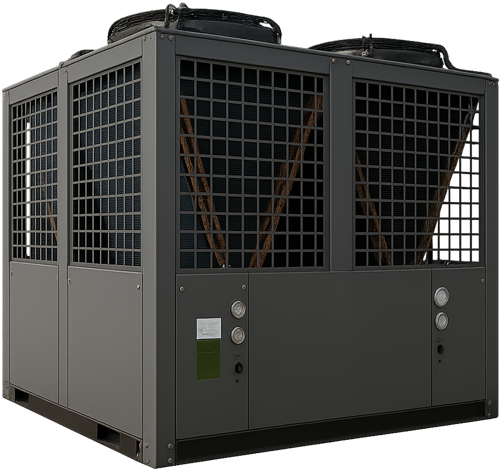
Dairies and food processing plants use hot water all day – for washing, cleaning-in-place (CIP), process heating and boiler feed. Much of it is still heated with diesel, LPG, wood, briquettes or electric heaters, which makes water heating one of the biggest energy bills in the plant. Industrial heat pumps offer a cleaner, cheaper way to supply this hot water.

Where dairies and food plants use hot water

  • Cleaning-in-place (CIP): hot water and hot cleaning solutions for tanks, pipelines, pasteurisers and fillers.
  • Can and crate washing: large volumes of warm to hot water through the day.
  • Process heating and pre-heating: warming milk, syrups, brines and other products, or pre-heating water before it reaches the boiler.
  • Floor and equipment washdown and hygiene stations.
  • Staff washrooms and canteens.

How an industrial heat pump helps

A heat pump takes heat from the surrounding air and moves it into water, using a small amount of electricity to do so. Because it moves heat rather than burning fuel, it delivers several units of heat for every unit of electricity it uses. For a plant that heats thousands of litres a day, that adds up to large savings.

  • Lower fuel bills: replace or cut back on diesel, LPG, wood or electric heating.
  • No open flames or fuel storage for the water heating load – safer and cleaner for food plants.
  • Automatic operation: hot water is ready when the shift starts, with no one needed to light or switch on heaters hours in advance.
  • Lower emissions, which helps with sustainability goals and customer audits.

Normal temperature or high temperature?

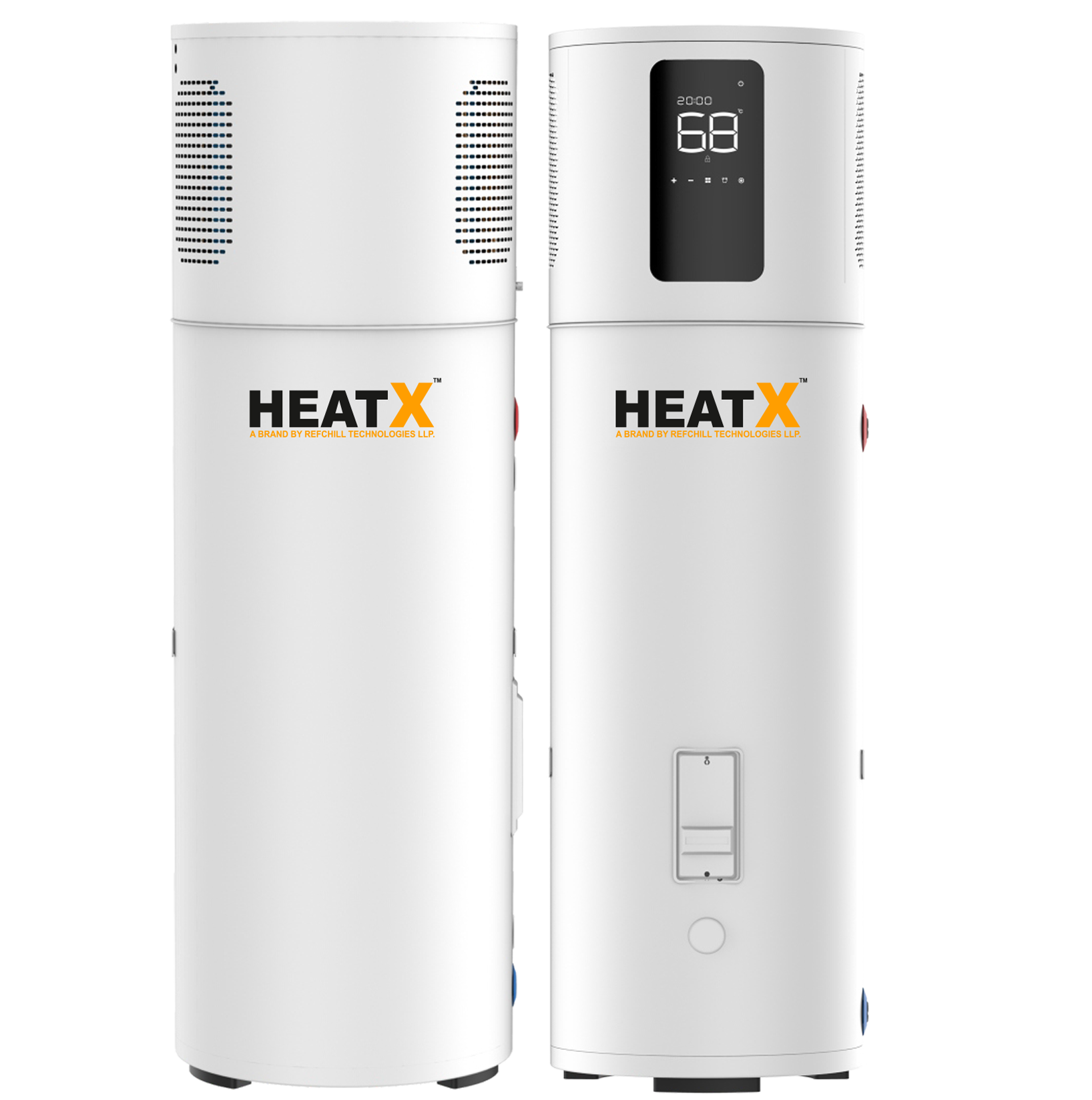
HEATX makes two kinds of industrial heat pump:

Our engineers size each system for your process temperature, flow rate and running hours.

A real example from industry

At Suchi Foams Pvt. Ltd., electric heater tanks were used to heat slabs for PUF panel production. A worker had to start the heating at least five hours before production, the system used a lot of electricity, and failing heater coils were a safety risk. After switching to a HEATX industrial heat pump, the heating became fully automatic, safer and far cheaper to run. The same benefits apply to dairies and food plants that heat water every day.

What to tell us for a sizing

  • How many litres of hot water you use per day, and at what temperature
  • Your peak hours and number of shifts
  • What you heat with today, and your monthly fuel or electricity cost for it
  • Your water quality (TDS and hardness) and available electrical supply

Share these details and we will recommend the right industrial heat pump system and estimate your savings. Contact HEATX or WhatsApp +91 98982 65323.

Heat Pump Water Heater Price in India: What Decides the Cost and How Fast It Pays Back

If you are comparing water heaters, the first question is usually: how much does a heat pump water heater cost in India? The honest answer is that the price depends on what you need – a heat pump for a 3-bedroom home is a very different machine from one that supplies a 200-room hotel. This guide explains what decides the price, and how quickly the running cost savings pay it back.

What decides the price of a heat pump water heater

  • Capacity (kW and litres): the biggest factor. Domestic systems are sized for one home’s daily use, while commercial and industrial systems are sized for thousands of litres a day. HEATX commercial air source heat pumps, for example, range from 15 kW to 160 kW.
  • Type of system: an all-in-one unit with a built-in tank, a split system with a separate tank, a commercial unit with a large storage tank, a swimming pool heat pump or an industrial process heat pump are all priced differently.
  • Storage tank: the tank size and material add to the cost. Bigger tanks carry you through peak hours but cost more.
  • Climate: sites with cold winters may need an EVI heat pump, which is built to keep heating efficiently in low outside temperatures.
  • Compressor and controls: inverter compressors, smart controllers and app or central control raise the price but also improve efficiency and convenience.
  • Installation: piping, insulation, electrical work, booster pumps for tall buildings and, where your water is hard, a water softener.

Look at running cost, not just purchase price

A heat pump usually costs more to buy than an electric geyser, but much less to run. On our cost comparison, heating 100 litres of water costs about:

Water heaterApprox. cost per 100 litres
Electric geyser₹43
LPG heater₹41
PNG heater₹32
HEATX heat pump₹11

Actual figures depend on your electricity tariff, gas price and incoming water temperature.

How to work out your payback period

You can estimate how fast a heat pump pays for itself with a simple calculation:

  1. Find your daily hot water use in litres and divide by 100.
  2. Multiply by the difference in cost per 100 litres. Against an electric geyser, that is about ₹43 − ₹11 = ₹32.
  3. Multiply by 365 to get your yearly saving.
  4. Divide the extra price of the heat pump system by the yearly saving to get the payback period in years.

Example: a hostel using 1,000 litres a day saves about 10 × ₹32 = ₹320 a day, or roughly ₹1.17 lakh a year compared with electric heating. The more hot water you use, the faster the payback – which is why heat pumps are so popular with hotels, hostels, hospitals and factories.

Costs that keep a heat pump running well

  • A voltage stabiliser where your supply is unstable.
  • A water softener if your water’s TDS is above 500 ppm or total hardness is above 200 ppm. Hard water causes scaling, and scaling damage from water above these limits without a softener is not covered by warranty.
  • Routine servicing as per the user manual. See our heat pump maintenance tips.

What the HEATX warranty covers

HEATX heat pumps carry a 5-year inner tank warranty, a 2-year compressor warranty and up to 2 years on the complete unit, with a 48-hour service response time. Read the full warranty terms.

Get an accurate quote

Because every site is different, we quote each system based on your actual needs. Tell us your daily hot water use (or the number of people, bathrooms or rooms), your location and your water source, and we will recommend the right model and give you a price. Contact HEATX or WhatsApp +91 98982 65323.

Want to size it yourself first? Read how to select the right heat pump or our heat pump vs geyser vs gas vs solar comparison.

Inverter vs On/Off Swimming Pool Heat Pump: Which Is Right for Your Pool?

A heated swimming pool can be used comfortably through the Indian winter, which means more bookings for hotels and resorts and more swim time for clubs, schools and homes. A swimming pool heat pump is the most economical way to do it: it takes heat from the surrounding air and transfers it to the pool water, at a much lower running cost than electric or gas pool heaters. HEATX makes two kinds – inverter and On/Off. Here is how they differ and which one suits your pool.

How a swimming pool heat pump works

Pool water is pumped through the heat pump’s heat exchanger, where it picks up heat collected from the outside air by the refrigerant circuit, and then flows back into the pool. Because the heat pump moves heat rather than making it, it delivers several units of heat for each unit of electricity it uses.

On/Off swimming pool heat pumps

An On/Off heat pump runs its compressor at full power until the pool reaches the set temperature, then switches off, and starts again when the water cools down.

  • Simple and robust: fewer electronic parts and straightforward operation.
  • Lower purchase price than an inverter unit of the same size.
  • Wide range: HEATX On/Off pool heat pumps are available from 18 kW to 220 kW.

Best for: pools with steady use and budgets where the upfront cost matters most.

Inverter swimming pool heat pumps

An inverter heat pump varies the speed of its compressor and fan. It runs hard when the pool needs a lot of heat, then slows down to hold the temperature steady instead of switching on and off.

  • Higher efficiency: the HEATX inverter pool heat pump uses a DC Mitsubishi compressor and DC fan motor, with a COP of up to 16.1 at its most efficient operating point.
  • Precise temperature: a 64-bit controller holds the water within 0.1°C of the set point.
  • Smart control: colour display options, app control, central (RS485) control for multiple units and PID automatic defrosting.
  • Quieter running at part load, which suits hotels and homes.

Best for: hotels, resorts and premium homes that want the lowest running cost, steady water temperature and quiet operation.

Inverter vs On/Off at a glance

InverterOn/Off
CompressorVariable speed (DC inverter)Fixed speed
Running costLowestLow
Temperature controlVery precise (±0.1°C)Cycles around set point
NoiseQuieter at part loadNormal
Purchase priceHigherLower

How to size a pool heat pump

The right capacity depends on:

  • The pool’s surface area and volume
  • The temperature you want and the coldest outside temperature in your area
  • Whether the pool is indoor or outdoor, and how exposed it is to wind
  • Whether you use a pool cover at night – this greatly reduces heat loss and lets you choose a smaller unit

Send us your pool’s length, width, depth and location, and our team will recommend the right model.

Which one should you choose?

If you want the lowest running cost and the most precise, quiet operation, choose the HEATX inverter swimming pool heat pump. If you want a simple, dependable unit at a lower purchase price, the HEATX On/Off swimming pool heat pump is a great fit. See the full swimming pool heat pump range, or contact HEATX for a free recommendation.

Heat Pump Water Heaters for Hotels, Hostels and Hospitals: A Sizing Guide

Hotels, hostels, hospitals, resorts and dharamshalas use large volumes of hot water every day, often at the same busy hours. That makes them ideal for heat pump water heaters, which cut water heating costs sharply compared with electric geysers, diesel or LPG. But to get reliable 24×7 hot water, the system has to be sized correctly. This guide walks you through how we size commercial heat pump systems at HEATX.

Step 1: Work out your daily hot water demand

Start with how much hot water your building uses in a day. As a general guide for Indian usage:

  • Per person: 30–50 litres a day
  • Per bathroom: about 100 litres a day

For hotels and hostels, count occupied rooms or beds at full occupancy. For hospitals, add kitchens, laundry and wards. Always size for your busiest season – usually winter – not an average day.

Step 2: Size the storage tank for your peak hours

Most commercial sites use the bulk of their hot water in a few morning and evening hours. A heat pump heats water steadily, so the storage tank is what carries you through the rush. The tank should hold enough hot water for your peak period, and the heat pump then reheats it in time for the next one.

Two real HEATX installations show how this works in practice:

  • Banas Medical College, Palanpur: one 20 kW HEATX commercial heat pump with a 3,000-litre storage tank supplies hot water to two hostel buildings, and has run for three years without a breakdown.
  • Yatrik Bhuvan, Poicha Nilkanthdham: each of three buildings has its own 20 kW HEATX heat pump, a 2,500-litre hot water tank and a twin booster pump system, giving guests 24×7 hot water all year.

Step 3: Choose the heat pump capacity

The heat pump’s capacity (in kW) decides how quickly it can reheat the tank. A larger kW rating means faster recovery between peaks. HEATX commercial air source heat pumps are available from 15 kW to 160 kW, and several units can be combined for large sites.

Rather than guess, share your numbers with us – rooms or beds, bathrooms, kitchens and laundry, and your peak hours – and our engineers will recommend the right kW and tank combination.

Step 4: Match the heat pump to your climate

  • Coastal and South India: standard air source heat pumps work very well year-round.
  • Gujarat, Maharashtra and Central India: standard or medium ambient units are usually suitable.
  • North India and hill areas with cold winters: choose an EVI heat pump, which uses enhanced vapour injection to keep heating efficiently in low outside temperatures.

If you have a reliable source of water such as a well or process water loop, a water source heat pump can be another efficient option.

Step 5: Plan the installation properly

  • Place the outdoor unit in an open, well-ventilated spot with at least 1 metre of free space around the air inlet and outlet.
  • Keep pipe runs between the heat pump and tank short, and insulate all hot water pipes.
  • For multi-storey buildings, add booster pumps so upper floors get good pressure.
  • Use a dedicated electrical supply with the correct MCB and proper earthing, and fit a water filter on the inlet.

See our full installation tips for more detail.

What will you save?

On our cost comparison, heating 100 litres costs about ₹43 with an electric geyser and about ₹11 with a HEATX heat pump. For a site using 3,000 litres a day, that is roughly ₹1,290 a day on electric heating against about ₹330 with a heat pump – a saving of around ₹960 a day. Read our heat pump vs geyser vs gas vs solar comparison for the full breakdown, and see what decides heat pump prices and payback. Once installed, follow our heat pump maintenance tips to keep it running efficiently.

Get a free sizing recommendation

Every commercial building is different. Contact HEATX or WhatsApp us on +91 98982 65323 with your building details, and we will recommend the right commercial heat pump system for you.

Heat Pump vs Geyser vs Gas vs Solar: Which Water Heater Costs Least to Run in India?

Every home, hotel and hostel in India needs hot water, but the way you heat it makes a big difference to your monthly bill. This guide compares the four common options – electric geysers, LPG/PNG gas heaters, solar water heaters and heat pump water heaters – so you can see what each one really costs to run.

How each type of water heater works

  • Electric geyser: an electric element heats the water directly. Even at around 95% efficiency, one unit of electricity can never give you more than about one unit of heat.
  • LPG or PNG heater: a gas burner heats the water. Running cost depends on gas prices, and you need gas storage or a pipeline connection, plus ventilation for the flue.
  • Solar water heater: collectors on the roof absorb sunlight. The energy is free, but output drops on cloudy days, in the monsoon and in winter mornings – exactly when you need hot water most.
  • Heat pump water heater: works like an air conditioner in reverse. It uses a small amount of electricity to move heat from the surrounding air into the water. A HEATX heat pump with an efficiency (COP) of about 3.8 delivers roughly 3.8 units of heat for every unit of electricity – about 380% efficiency.

Running cost per 100 litres of hot water

Here is the operating cost comparison we show on our homepage, for heating 100 litres of water:

Water heater typeEfficiencyApprox. cost per 100 litres
Electric geyser95%₹43
LPG heater85%₹41
PNG heater85%₹32
HEATX heat pump380%₹11

Your actual cost will depend on your electricity tariff, gas price, the temperature of your incoming water and the outside air. Treat these figures as a fair comparison, not an exact quote.

What the savings look like over a year

Take a hostel or small hotel that uses 1,000 litres of hot water a day:

  • Electric geyser: 10 × ₹43 = ₹430 per day
  • HEATX heat pump: 10 × ₹11 = ₹110 per day

That is a saving of about ₹320 a day, or roughly ₹9,600 a month and ₹1.17 lakh a year – before counting lower maintenance and the end of geyser element replacements. The bigger your daily hot water use, the faster a heat pump pays for itself.

What about solar water heaters?

Solar is a good source of free energy, but it cannot promise hot water every day. Many of our customers switched to heat pumps after their solar systems fell short in winter and the monsoon. At Yatrik Bhuvan, Poicha Nilkanthdham, for example, guests often went without enough hot water until each building was fitted with a 20 kW HEATX heat pump and a 2,500-litre tank. Now they have hot water 24×7, all year.

A heat pump works day and night and in any season. If you already have solar, a heat pump can also be used alongside it as a reliable backup.

When does an electric geyser still make sense?

For a single bathroom with light, occasional use, a small electric geyser is cheap to buy and simple to fit. Once a household uses 150 litres or more a day – or for any hotel, hostel, hospital or factory – the running cost difference quickly outweighs the higher purchase price of a heat pump.

Which should you choose?

Running a hotel, hostel or hospital? See our commercial heat pump sizing guide. Not sure what size you need? Read our guide on how to select the right heat pump, or contact HEATX and our team will work it out for you.