
Every home, hotel and hostel in India needs hot water, but the way you heat it makes a big difference to your monthly bill. This guide compares the four common options – electric geysers, LPG/PNG gas heaters, solar water heaters and heat pump water heaters – so you can see what each one really costs to run.
How each type of water heater works
- Electric geyser: an electric element heats the water directly. Even at around 95% efficiency, one unit of electricity can never give you more than about one unit of heat.
- LPG or PNG heater: a gas burner heats the water. Running cost depends on gas prices, and you need gas storage or a pipeline connection, plus ventilation for the flue.
- Solar water heater: collectors on the roof absorb sunlight. The energy is free, but output drops on cloudy days, in the monsoon and in winter mornings – exactly when you need hot water most.
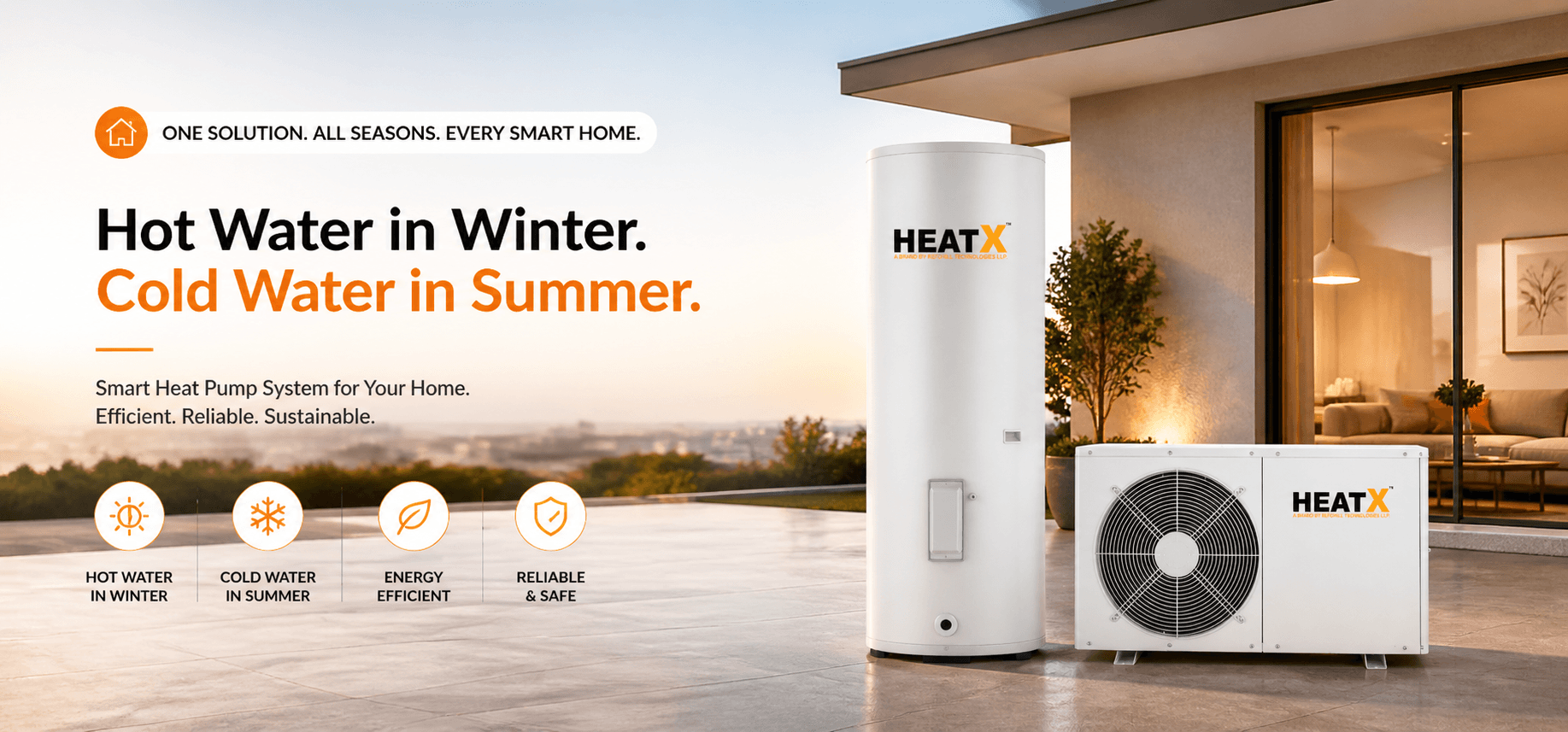
- Heat pump water heater: works like an air conditioner in reverse. It uses a small amount of electricity to move heat from the surrounding air into the water. A HEATX heat pump with an efficiency (COP) of about 3.8 delivers roughly 3.8 units of heat for every unit of electricity – about 380% efficiency.
Running cost per 100 litres of hot water
Here is the operating cost comparison we show on our homepage, for heating 100 litres of water:
| Water heater type | Efficiency | Approx. cost per 100 litres |
|---|---|---|
| Electric geyser | 95% | ₹43 |
| LPG heater | 85% | ₹41 |
| PNG heater | 85% | ₹32 |
| HEATX heat pump | 380% | ₹11 |
Your actual cost will depend on your electricity tariff, gas price, the temperature of your incoming water and the outside air. Treat these figures as a fair comparison, not an exact quote.
What the savings look like over a year
Take a hostel or small hotel that uses 1,000 litres of hot water a day:
- Electric geyser: 10 × ₹43 = ₹430 per day
- HEATX heat pump: 10 × ₹11 = ₹110 per day
That is a saving of about ₹320 a day, or roughly ₹9,600 a month and ₹1.17 lakh a year – before counting lower maintenance and the end of geyser element replacements. The bigger your daily hot water use, the faster a heat pump pays for itself.
What about solar water heaters?
Solar is a good source of free energy, but it cannot promise hot water every day. Many of our customers switched to heat pumps after their solar systems fell short in winter and the monsoon. At Yatrik Bhuvan, Poicha Nilkanthdham, for example, guests often went without enough hot water until each building was fitted with a 20 kW HEATX heat pump and a 2,500-litre tank. Now they have hot water 24×7, all year.
A heat pump works day and night and in any season. If you already have solar, a heat pump can also be used alongside it as a reliable backup.
When does an electric geyser still make sense?
For a single bathroom with light, occasional use, a small electric geyser is cheap to buy and simple to fit. Once a household uses 150 litres or more a day – or for any hotel, hostel, hospital or factory – the running cost difference quickly outweighs the higher purchase price of a heat pump.
Which should you choose?
- Homes and villas with regular daily use: a domestic heat pump water heater.
- Hotels, hostels, hospitals and resorts: a commercial heat pump with a storage tank.
- Swimming pools: a swimming pool heat pump.
- Factories and process heating: an industrial heat pump.
Running a hotel, hostel or hospital? See our commercial heat pump sizing guide. Not sure what size you need? Read our guide on how to select the right heat pump, or contact HEATX and our team will work it out for you.